
Book Proofreading Services for a Clean Final Draft
After editing, our manuscript proofreading services catch the small errors that can remain in spelling, punctuation, grammar, and consistency. Our professional proofreading services give your approved text a careful final review while preserving your wording, tone, and voice before publication.
A final check before your book reaches readers
By the proofreading stage, the main writing and editing decisions should already be settled. The chapters are in place, the tone has been approved and the manuscript should no longer need major rewriting. What remains are the smaller mistakes that can easily survive several rounds of revision: a missing word, inconsistent capitalisation, doubled punctuation or a character name spelled two different ways.
Our manuscript proofreading services provide a focused final review. You submit the latest approved file, along with any style preferences or publishing requirements. A professional proofreader checks the text line by line and marks corrections without reopening the structure or changing your writing unnecessarily.
This service suits authors whose manuscripts have already been professionally edited or carefully revised. If the book still has problems with structure, clarity, repetition or sentence flow, book editing services should come first.
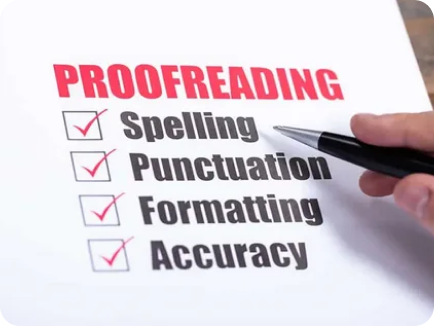
Requirements
Proofreading should begin after the writing and editing stages are complete. If chapters are still being rewritten while the proofreader is working, corrections can be lost and the same pages may need to be checked again.
Before the project begins, we confirm which file is final, what type of proofreading is required and whether the review will take place before or after formatting. We also agree on how corrections will be shown and who will approve them.
Deliverables
Your written scope explains what will be checked, which file format will be returned and whether a second review is included. It will also state whether the project covers manuscript proofreading, a formatted PDF proof or both.
The proofreader focuses on final corrections rather than broad rewriting. Any issue that falls outside the proofreading scope will be flagged for discussion rather than changed without your approval.

Your publishing journey starts here.
Take your manuscript to the next chapter with Winfrey Publishing. Whether you are starting from a single idea or holding a finished draft, an editorial director is ready to read it — original writing, unlimited revisions until you approve, and support you can actually reach on the telephone.

Book Proofreading, stage by stage
-
Confirm
We review the file, word count and current stage of production. We confirm whether the manuscript is ready for proofreading and identify any areas that may still require editing. You then receive a written scope covering the file type, schedule, checking method, fee and included review stages.
-
Proofread
The assigned proofreader reads the manuscript carefully and marks errors according to the approved style and language preference. The focus stays on accuracy and consistency. The proofreader does not rewrite passages simply because another wording might sound better.
-
Review
You receive the corrected file and review any questions raised by the proofreader. You can accept, reject or discuss corrections before the file moves forward. Where proofreading is completed on a formatted PDF, the corrections may need to be applied by the book formatter or layout designer.
-
Finalise
We complete any included follow-up check and provide the final proofread file stated in your scope. If the book is later reformatted, updated or revised, another proof check may be needed because new errors can appear during layout changes.
Final manuscript proofreading
Proofreading servicesFinal manuscript proofreading takes place after editing but before the book is formatted. The proofreader works through the approved text and corrects small language errors that remain. This option is useful when the author wants a clean manuscript before it is passed to the formatting or interior design team. It reduces the number of text corrections that need to be made inside the layout file.
Print proof proofreading
Print proof proofreading takes place after the book has been formatted. The proofreader checks the actual page layout rather than only the manuscript text. This stage can catch errors introduced during production, including broken words, missing text, awkward page breaks, repeated headings and incorrect page references.
PDF proofreading
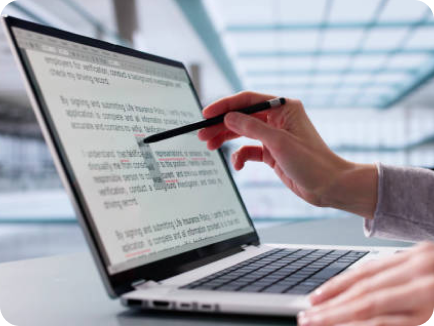
A PDF proof can be reviewed with comments or correction marks. This is often the most practical option for books that have already been typeset. The proofreader may check both language and visible layout issues, depending on the agreed scope.
Fiction proofreading
Fiction proofreading checks spelling, punctuation, dialogue formatting and consistency across the manuscript. It may also catch changes in character names, locations, dates or physical details. Plot development, character motivation and pacing belong to editing rather than proofreading.
Nonfiction proofreading
Nonfiction proofreading checks the final text, headings, lists, terminology and basic reference consistency. The author remains responsible for factual accuracy and for confirming that specialist claims are supported.
Children's book proofreading
Children's books often contain fewer words, but small errors are highly visible. Proofreading may include the manuscript, final page layout or both. The proofreader can also check whether punctuation, capitalisation and repeated phrases remain consistent across illustrated pages.
Memoir proofreading
Memoir proofreading focuses on the final language while also checking names, dates and repeated references for consistency. It does not confirm whether every memory or event is factually complete. The author must review personal and legal details before publication.
Business and professional book proofreading
Professional nonfiction often contains headings, terms, case studies and references that must remain consistent throughout the book. The proofreader can check presentation and language, but specialist or legal accuracy may require a separate qualified reviewer.
Academic and reference proofreading
Academic books may require close attention to citations, footnotes, endnotes, bibliographies, tables and style conventions. The scope should state whether the proofreader is checking format consistency only or also comparing citations against source material.
Ebook proofreading
Ebook proofreading may include a review of the final EPUB or Kindle preview. The checker looks for text errors, broken characters, spacing problems, incorrect links and navigation issues. Ebook testing is different from proofreading the original Word manuscript because conversion can create new problems.
Audiobook script proofreading
An audiobook script may need a final check before recording begins. The proofreader can flag missing words, unclear abbreviations, difficult pronunciations and inconsistencies between chapters. Pronunciation guidance and narration notes can be included when listed in the scope.
Why authors trust us with their book proofreading
The service list tells you what is being produced. The written agreement tells you who is responsible, what you will receive and what happens before the work moves to the next stage.
-
01
A named coordinator
One person manages the schedule, answers your questions and keeps the project moving.
-
02
Service-matched specialists
You know who is working on your project and why their experience suits the book.
-
03
You keep ownership
Your copyright, royalties and approved production files remain yours. We provide services; we do not acquire your work.
-
04
A fixed written scope
Deliverables, timelines, revision rounds, fees and exclusions are agreed before work begins.
About book proofreading
Book editing deals with larger concerns such as structure, content, clarity, tone and sentence quality. Proofreading is the final check for small errors after those decisions have been made. If the manuscript still needs chapters moved, arguments clarified or passages rewritten, it is not ready for proofreading.
Hire a proofreader after the manuscript has been edited and the main revisions are complete. You may also need a second proofread after formatting, especially for books with complex layouts, tables, images, footnotes or several heading levels.
Not every author hires a separate editor, but the manuscript should be fully revised before proofreading begins. A proofreader can correct small mistakes. They cannot properly fix structural or sentence-level problems within a standard proofreading scope.
Yes. PDF proofreading is suitable for books that have already been laid out. Corrections are usually marked as comments or annotations so the formatter can apply them to the source file.
Both stages can be useful. Proofreading before formatting cleans the manuscript text. Proofreading after formatting checks the final pages and catches errors introduced during typesetting or file conversion. For many books, the safest process is to complete a manuscript proofread first and a final page proof later.
A professional proofreader normally checks spelling, grammar, punctuation, missing words, repeated words and style consistency. Depending on the scope, they may also check headings, page references, footnotes, image captions, lists and visible layout problems.
Minor corrections may improve basic grammar or clarity, but extensive rewriting belongs to line editing or copy editing. If the proofreader finds repeated awkward wording, the manuscript may be returned with a recommendation for further editing.
Standard proofreading does not include full fact-checking. The proofreader may flag obvious inconsistencies, but the author remains responsible for names, dates, quotations, statistics, references and specialist claims unless a separate fact-checking service is included.
We can check whether citations follow a consistent format when this is included in the scope. Verifying each citation against the original source requires additional work and should be agreed separately.
The timeline depends on the word count, file type, subject and condition of the manuscript. A clean, straightforward novel will usually take less time than a book with tables, citations, footnotes and complex page design. The schedule is confirmed after the file has been reviewed.
Our other related services
Books rarely need just one studio. Everything we do sits under one roof, so whatever you pair with book proofreading is coordinated by the same team, under a single written scope — pick another service, or hand us the whole arc.
Book Publishing Service
From finished manuscript to a book readers can buy
If the manuscript is complete and you want one team to carry it through editing, design, production and distribution, this is the service. One coordinator keeps the work moving and tells you what needs approval next.
Before we begin, you receive a written scope showing what is included, what it costs, the expected schedule and what we need from you. You approve each stage. We do not move the book forward simply to keep the calendar tidy.
You keep the copyright, royalties and production files. We make the book orderable through the agreed retail and distribution channels; we do not promise shelf placement or a sales figure that no publisher can honestly guarantee.
- ISBN & metadata
- Retail listing
- Royalty setup

Book Writing Service
Your idea, shaped into a book that still sounds like you
A book does not always begin as a finished manuscript. It may begin as recorded conversations, notebooks, research files, unfinished chapters or years of knowledge that have never been organised for a reader.
Our book writing services give that material a clear structure. We begin with a conversation about the purpose of the book, the intended reader and the voice you want to preserve. From there, your writer prepares an outline for approval before drafting begins.
Chapters are delivered in agreed stages, giving you time to read, question and revise the work as it develops. You supply the knowledge, experience and direction; your writer turns it into a manuscript that reads naturally and holds together from the first page to the last.
- Chapter plan
- Weekly calls
- Accountability

Book Editing Service
Structure first. Sentences second.
Developmental editing can change what the book is. Copyediting and proofreading improve how the finished book reads.
Your editor reads the manuscript as a whole. In fiction, that means testing the ending, pace, character motives and point of view. In nonfiction, it means checking whether the chapter order serves the reader, whether each section has a clear job and whether the evidence carries the claim.
You receive a written editorial report, usually fifteen to twenty-five pages, plus the manuscript with comments at the exact places where a problem appears. The report explains priorities and possible fixes. The margin notes show where to begin.
- Structure
- Pacing
- Editorial queries

Book Proofreading Service
The final reading before the book goes to print
Proofreading begins after the writing, editing and interior layout are complete. At this stage, the book should already be settled. The proofreader's job is to catch the small errors that remain before those errors become part of the published edition.
Our professional book proofreading service checks spelling, punctuation, grammar and consistency across the final pages. We also review chapter headings, page numbers, running heads, captions, contents pages, footnotes and cross-references.
The proofreader works from the typeset file rather than the original manuscript. This matters because new problems can appear during layout, including missing words, awkward line breaks, repeated text and headings that no longer match the contents page.
- Consistency
- Typos
- Final pass

Book Formatting Service
Type that lets the reader forget about type
Good interior design is quiet. The reader should reach page 300 without noticing the machinery that carried them there.
That quiet result comes from dozens of small decisions: a typeface built for long reading, a comfortable line length, leading suited to the page, and margins that leave room for the gutter. Chapter openings, running heads, page numbers, front matter and blank versos all need to behave as one system.
Then comes the typesetter's close work: removing widows and orphans, controlling hyphenation, correcting dashes and small caps, and handling block quotations, epigraphs, tables, footnotes and captions properly. A Word file can look finished on screen and still fail in print. We prepare it for the actual book.
- Reflowable eBook
- Print PDF
- Fixed layout

Interior Page Layout
Pages designed around the way the book will be used
Some books need more than straightforward typesetting. Workbooks, cookbooks, academic titles, illustrated books and business publications may include tables, sidebars, exercises, photographs, charts or sections that readers need to find quickly.
Our interior book layout design service gives those elements a clear visual order. We establish the page size, margins, type hierarchy and spacing before building a set of sample pages for your approval. Once the direction is agreed, the same design system is applied throughout the book.
Images are placed at the correct resolution. Captions, tables and callout boxes follow a consistent style. The finished interior is checked against the requirements of the selected printer or publishing platform, so you receive production-ready files built for the actual trim size, binding and edition.
- Sample chapter
- Print-ready PDF
- eBook-ready file

Author Website Design Service
A home for the book that you control
Social platforms can change their rules overnight. Your website and mailing list remain yours. For an author building more than one book, that independence matters.
We build the pages authors tend to need: a clear home page, a page for each book with retailer links, an about page, press materials, contact details and an events or news section when it has a real purpose.
The mailing list is set up with a useful sign-up offer, a welcome message and an account you control. When the next book is ready, you can reach readers directly instead of hoping an algorithm shows them the post.
- Homepage
- Book page
- Mailing list

Book Video Creation Service
A short film that leaves the reader curious
A trailer is useful because video travels further than a static cover on most social platforms. It also gives a new reader a quick sense of the book's mood.
The best trailers are usually thirty to sixty seconds. They establish the premise, set the tone and stop before they begin summarising the plot.
We start with the same question as the cover: what promise is the book making? From there we write the script, build the storyboard and choose the right production route, whether that is licensed footage, motion graphics, custom animation or a filmed piece with the author.
- Script
- Motion
- Sound design

Book Cover Design Service
The reader's first decision
A cover has only a few seconds to show what kind of book this is and who it is for.
That makes cover design a genre question before it becomes a matter of taste. Readers recognise the visual language of a thriller, a memoir or a business book long before they read the description. Your designer studies current titles in the exact category and uses that research to brief the work.
You receive genuinely different concepts, not the same design in three colours. After you choose a direction, we refine it and build the complete wrap. The spine width is calculated from the final page count and paper stock, so the printed cover fits the book rather than a template.
- Concept
- Typography
- Print-ready

Illustration Service
Pictures that carry half the story
In a picture book, the words may take up only a few hundred lines. The illustrations carry the setting, pace, emotion and often the joke.
We begin by matching the manuscript with an illustrator whose style suits it. You review portfolios and choose the artist; we do not assign whoever happens to be available.
Before a full spread is painted, the illustrator develops character sheets with expressions, poses and views from different angles. This is the right moment to say, "The face is not quite right." A change costs one sketch here. Later, it may mean redrawing fourteen finished spreads.
- Character design
- Spreads
- Style guide

Book Marketing Service
Work you can see, rather than promises you cannot test
Book marketing is often sold as a guarantee. It is not. We treat it as a defined programme of work with named deliverables, dates and reporting.
A typical ninety-day programme is led by a marketing coordinator and built around the book, its readers and the channels that make sense for it.
Retailer optimisation comes first. We rewrite the listing for the way readers scan a retail page, research the categories and search terms, and test alternative descriptions where the platform allows it. You can see what changed and why.
- Launch plan
- Outreach
- Honest reporting

Audiobook Recording Service
A voice chosen for this book
Audiobooks reach people who may never sit down with a printed copy: commuters, walkers, busy readers and people with print disabilities. The format is not an afterthought. It is another edition of the book.
The narrator matters most. You hear candidates read a passage from your own manuscript, then choose the voice that fits its age, accent, pace and emotional range.
For fiction and memoir, a director attends the recording to catch mispronunciations and uneven character voices while they can still be corrected in the session.
- Narrator casting
- Studio master
- Retail files

Stationery Design Service
Printed materials that belong to the same world as the book
A book may be the centre of an author's work, but it is rarely the only printed material readers see. Business cards, bookmarks, letterheads, postcards and event materials often introduce the author before someone opens the book.
Our author stationery design service carries the visual character of the cover into those supporting pieces without simply copying it. Type, colour and graphic details are adapted so each item feels connected to the book while remaining practical to use.
We begin by confirming what you need and where it will be printed. You then receive a design direction for approval, followed by the individual layouts and revision rounds included in the written scope. Final files are supplied in the correct sizes and formats for professional printing.
- Bookmarks & postcards
- Business cards
- Launch graphics

Your manuscript is ready for its next chapter
Thirty minutes, no obligation, and an honest answer about what your book needs. If we think you should keep revising, that is what you will hear.