Reaches People Who Prefer to Listen
Some readers are more likely to finish a book in headphones. Audio makes the title available during commutes, exercise and parts of the day when reading a page is not practical.

Tell us which stages your book still needs and we will quote the whole set in one place.
Request a single quoteA finished audiobook has to sound good and meet the technical rules of the stores that will carry it. We prepare the script, guide narration and production, then master the files. Final quality checks cover platforms such as ACX and Audible. You approve the creative decisions and keep the finished masters and rights.
The work moves in five stages. We settle the edition, script, voice, production scope and delivery requirements before the full recording begins, so creative choices and technical standards do not collide at the end.
Before a microphone is booked, we decide what kind of audio edition the manuscript needs and where it is expected to go. A memoir in the author's own voice, a single-narrator novel and a practical nonfiction title all create different production demands. We also confirm the required audiobook file format, retailer destinations and any ACX audio specifications that affect the final masters. That early decision keeps later recording and mastering work tied to a real delivery target.
A print manuscript contains things a listener cannot see: tables, footnotes, page references, image captions and visual headings. We resolve those before recording, mark difficult pronunciations and decide how front matter and back matter will be spoken. The result is a clean recording script that supports chapter file splitting and reduces avoidable studio corrections later.
Shortlisted narrators audition on a passage from your manuscript, so you hear how they handle your names, dialogue, pacing and tone. You are not judging a generic demo reel. Once you approve a voice, we document the decision before full recording begins. That matters because changing narrators after production starts usually means recording large sections again.
The written scope names the expected finished hours, narrator arrangement, correction rounds, delivery platforms, master files and technical standards. Where ACX is part of the route, the scope can include the relevant MP3 delivery rules, RMS and peak targets, noise floor checks and other ACX audio specifications. Anything outside the agreed production is priced separately rather than appearing as an unexpected studio charge later.
We proof the recording against the manuscript, not only by listening for obvious noise. Dropped words, repeated lines and mispronounced names are marked for correction, then replacement takes are matched to the surrounding audio. After that, audio mastering brings the files into the level, peak, noise and format limits required by the destinations in scope. The upload is checked as well, because a technically clean master still has to pass the platform review.
Listeners notice rough audio quickly. Uneven volume, long silences, clipped peaks or badly split chapters can make a professional narration feel unfinished. A properly prepared edition is easier to listen to and easier to submit. It also gives the book another format for readers who prefer audio, without pretending that an audiobook alone can guarantee sales.
Some readers are more likely to finish a book in headphones. Audio makes the title available during commutes, exercise and parts of the day when reading a page is not practical.
A production can be adapted for Audible, Apple Books, Spotify, Kobo, Google Play. We prepare deliverables around the specifications in scope rather than assuming every storefront wants the same file package.
Good chapter file splitting is more than cutting the recording at headings. The breaks need clean starts and finishes, consistent room tone and pacing so listeners can navigate without abrupt jumps.
The audiobook is its own edition with production cost, price and royalty structure. It can add a way for the book to earn, but does not repair problems in the manuscript.
You may have a finished manuscript, an older ebook, raw narration from another studio or a project that stalled halfway through. We start by looking at what exists and what still has to be prepared. From there, you receive a written view of the recording, mastering and delivery work needed before you commit to the full production.
We start with the book, the intended listener and the stores or distributors you want to reach. That produces a practical brief covering narration style, treatment of front and back matter, audiobook file format and any retailer-specific requirements. The brief keeps creative choices connected to the technical destination from the beginning.
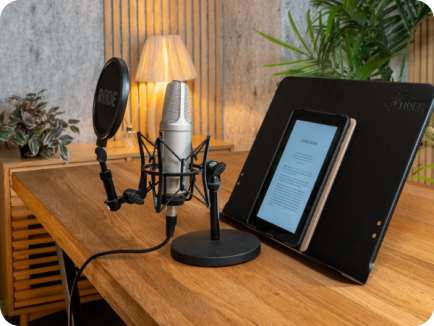
The manuscript is converted into a script that can be read aloud cleanly. Visual references are resolved, pronunciations are marked and chapter boundaries are confirmed. Shortlisted narrators then audition on your own words. Once the voice is approved, we can move into full recording without reopening a decision that should have been settled earlier.

Recording takes place under consistent conditions with the script followed closely. The director catches pronunciation problems, missed words and delivery issues while the session is still live where possible. Keeping microphone position, room tone and performance consistent across chapters makes later editing and mastering far cleaner.

The finished recording is proofed against the text, corrected where needed and mastered to the technical standards in the scope. That includes RMS and peak levels, noise floor, silence treatment, chapter file splitting and final MP3 preparation. For ACX delivery, files are prepared to the current ACX requirements, including constant bit rate MP3 at 192 kbps or higher where applicable, followed by a final quality check before submission.
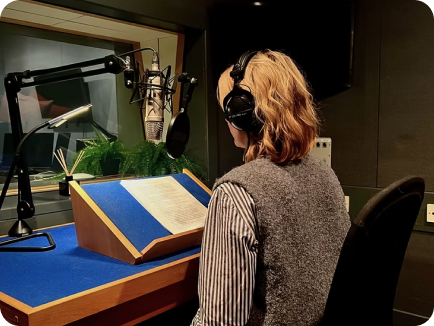

Auditions are recorded from your own manuscript rather than from a showreel, so the samples you hear are always your words. Ask for a sample.
A strong performance still needs technical finishing. We check loudness consistency, peaks, background noise, chapter boundaries and file encoding so the edition is comfortable to hear and ready for the platforms named in your project. The goal is simple: no avoidable technical reason for a retailer to reject the files.
Each chapter is proofed against the manuscript, corrected in matching takes and mastered as part of the same audio system rather than treated as a collection of unrelated files.
Audible, Apple Books, Spotify, Kobo, Google Play and library distributors may share much of the same source audio, but delivery rules and metadata can differ. We organise the masters and exports around the storefronts listed in your scope and explain the difference between wide and exclusive routes before anything is submitted.
You keep the agreed master files and rights. Our role is production, mastering and delivery support; we do not take ownership of your manuscript or recording.
The author wanted to narrate her own memoir, and the material supported that choice. Instead of replacing her with a professional voice actor, the production focused on coaching, shorter sessions and consistent direction. The technical work mattered just as much as the performance: clean recording conditions, careful edits and mastering kept an authentic voice from sounding amateur. It took more preparation, but the result sounded like the person whose story listeners came to hear.
Read More
This title already existed in print and ebook, so the work was not about rewriting the book. It was about building a separate audio edition with the right narrator, square cover adaptation, chapter structure and retail-ready masters. The audiobook did not need to imitate the paperback. It needed to work as audio, meet the file requirements of the chosen distributors and give the backlist title a new format to promote.
Read More
The manuscript contained footnotes, tables and references to page-based figures. Those elements make sense on paper but become confusing when read aloud without adaptation. Before recording, the material was converted into spoken language, some supporting detail was moved to a companion resource and chapter transitions were clarified. The production became simpler because the script had already solved the problems the microphone could not.
Read More
Summaries of work carried out in house. Titles, authors and publication details are withheld under the confidentiality terms of the productions.
Print, ebook and audio are separate editions with different production rules. Each should be scoped on its own so you can add the format that makes sense now without paying for a bundle you did not ask for.
They are the technical and organisational rules that turn finished narration into files a retailer or distributor can accept. Depending on the platform, they can cover file type, bit rate, RMS and peak levels, noise floor, chapter separation, opening and closing credits, silence at the beginning and end of files, cover art and sample preparation. Your scope identifies the destinations so the masters are built for actual submission requirements rather than a generic audio export.
Yes, and it should be proofread. Recording is an expensive place to discover late text changes because a correction has to match the narrator, microphone and room sound from the original session. We prepare the recording script only after the text is stable enough to be spoken as the final edition.
Yes, when the book and the voice make sense together. Memoir and expert-led nonfiction can benefit from hearing the author directly, but narration still needs preparation, direction and a suitable recording space. We assess the manuscript and sample voice before recommending author narration simply because it appears cheaper.
We shortlist against genre, listener expectations and the demands of the text, then ask candidates to record a passage from your book. You hear how each person handles your language rather than relying on a generic demo. The narrator is approved before full production begins.
Narration and production are commonly priced against finished hours, while script preparation, mastering or repair work may be quoted separately depending on the project. Your written scope states the expected duration, correction allowance, deliverables and any work outside the base production before recording begins.
The schedule depends on manuscript length, script preparation, narrator availability, correction rounds and retailer review. A full-length title often takes several weeks from approved script to final masters. Your project schedule is confirmed in writing, and platform review time is treated separately because it is not controlled by the production team.
It is the version of the manuscript prepared specifically for spoken delivery. The script resolves footnotes, tables, page references and visual material, marks pronunciation where needed and confirms what the narrator should actually say at chapter openings, credits and other structural points. Good script preparation saves studio time and prevents a large amount of avoidable re-recording.
Unabridged production is the normal starting point. If the book needs to be shortened for audio, that is an editorial decision and should happen before recording begins. An abridged edition needs its own approved script rather than an audio file that is simply cut down after the fact.
The destination depends on your distribution plan. Common routes include ACX and Audible, Apple Books, Spotify, Kobo, Google Play and library or subscription distributors. We prepare the files for the platforms named in the scope and explain any delivery differences that affect format, exclusivity or distribution.
A retail sample is prepared from the finished mastered audio rather than from a rough studio take. The excerpt should represent the book clearly, start and end cleanly and meet the platform rules that apply to sample length and content. Where the distributor requires a separate sample file, it is exported and checked with the rest of the delivery package.
No production team should promise automatic approval. An ACX quality check is designed to catch the common technical causes of rejection, including file encoding, loudness, peaks, noise, spacing and chapter organisation. We correct what is within the production scope and verify the files before submission, but the platform still makes the final acceptance decision.
You receive the agreed masters, chapter files and production materials under the rights terms in your written agreement. Narrator arrangements are also stated there, whether the engagement is paid production, royalty share or another model. We provide the audiobook mastering service and production support; we do not acquire your book.
Bring the manuscript, existing recordings or platform requirements you already have. We will tell you whether the next step is script preparation, narration, audio mastering, an ACX quality check or simply reorganising files that are already good. The point of the call is to define the work before you pay for production that your audiobook does not need.