The Edition People Keep
A well-made paperback is easy to handle, comfortable to read and consistent from the first page to the last. Good formatting is quiet. Readers notice it mainly when it is wrong.

Tell us which stages your book still needs and we will quote the whole set in one place.
Request a single quoteA printed book has to work as a physical object, not just look tidy on a screen. Our print book formatting service sets the trim size, page design, gutter and margins, bleed, and final PDF around your printer. We build the interior for reading, check the cover dimensions, and proof the result before you print.
The work follows five stages. We agree the trim size, stock, binding, printer and scope before typesetting begins, so the design is built around a real production route rather than adjusted at the end.
A pocket paperback, trade paperback, hardback and large-print edition solve different problems. We look at genre, reader expectations, page count, binding and retail price before choosing the format. That early trim size selection affects almost everything that follows, including unit cost, spine width and how comfortable the finished book feels in the hand.

Typeface, size, leading, line length and margins are chosen for long reading sessions, not for a single attractive spread. The gutter and margin setup also has to account for the binding, especially on thicker paperbacks. A page that looks generous in a PDF can feel cramped once it is bound, so we design for the physical book from the start.
We typeset chapter openers, running heads, folios, half title, copyright page, dedication, part pages, images, tables and any index. Widows, orphans, awkward breaks and stacked hyphens are corrected page by page. Where the binding uses signatures, the final extent is managed deliberately instead of adding empty pages without a reason.
Your written scope names the trim size, paper stock, binding, printer, correction rounds, files, proofing route, schedule and fee. It also states what is outside the job. That keeps a paperback formatting service from quietly turning into cover design, editing or a different edition unless you choose to add those separately.
The print ready PDF export is built on the current template for Amazon KDP, IngramSpark or the printer named in your scope. Bleed requirements, margins and spine dimensions are checked against the final page count and paper stock. We then review a physical proof, because ink density, show-through and the real gutter are things a monitor cannot show accurately.
A printed edition gives readers something they can hold, sign, gift, shelve and take to an event. It is also the format shops and libraries can stock. Print on demand has removed the need to buy a large first run, which makes professional print ready book formatting useful even for authors who want to start with a small, low-risk release.
A well-made paperback is easy to handle, comfortable to read and consistent from the first page to the last. Good formatting is quiet. Readers notice it mainly when it is wrong.
A physical edition can be ordered for signings, libraries, direct sales and retail distribution. The interior and cover match the ISBN, trim size, binding and printer specifications used for that edition.
Print on demand means a copy is manufactured after an order is placed. Amazon KDP and IngramSpark make this easy for authors, but the files have to meet each platform's rules.
A print file cannot be patched after a copy has already been manufactured. Bleed requirements, gutter and margin setup, page breaks and the print ready PDF export are checked before approval.
You may have a clean manuscript, a paperback already live on Amazon KDP, or a PDF that a printer keeps rejecting. We start by looking at the actual files and the route you want to use. You then receive a clear recommendation, a written scope, and an explanation of what needs fixing before any typesetting begins.
We begin with the book, its reader and where it will be sold. The production brief records the trim size, binding, paper stock, colour treatment, print route and target price. This is also where we decide whether you need to format the book for print on demand through Amazon KDP or IngramSpark, or prepare it for a separate printer.
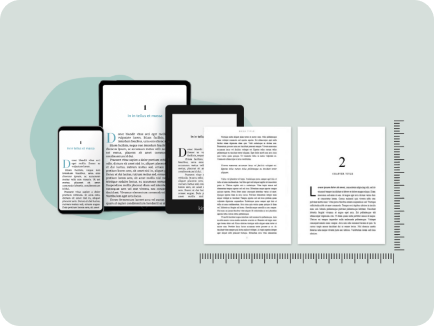
The page design is built around readable type, sensible line length and the binding's real gutter allowance. You review representative sample pages before the full book is flowed. That gives us a chance to settle the book trim size guide decisions, paragraph styling and difficult page types while changes are still inexpensive.

The full manuscript is typeset, including front matter, chapter openings, running heads, folios, tables, images and back matter. Page-level problems are corrected by hand. The goal is a consistent interior that reads naturally and holds up when it is converted into the final print-ready PDF.

Once the interior is final, the page count and paper stock are used for the spine width calculation. We complete the print ready PDF export with the correct trim, bleed and margins, then review a physical proof before approval. If the proof exposes a real production issue, we fix the file before the run.
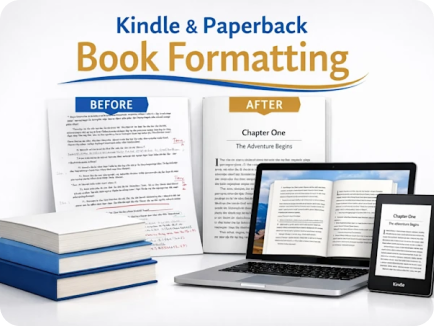

The finished edition combines trim size selection, readable typography, correct margins and a printer-specific PDF. Paperback, hardback and dust-jacket editions are treated as separate production files because the binding changes the cover dimensions, spine and sometimes the interior itself.
Paperback, case-bound hardback and dust-jacketed editions are scoped separately so the files match the binding you are actually producing.
For Print on demand, we prepare the files around the platform you are using, commonly Amazon KDP or IngramSpark. We also explain where an offset run may make more sense. The route affects paper choices, unit cost, distribution settings and which retailers can order the finished book.
You keep the print-ready PDF files, ISBN and rights, and your printer or distributor accounts stay in your name.
The manuscript was fine, but the uploaded PDF was the wrong trim size, the inner margin was too narrow for the binding and full-page images had no bleed. We rebuilt the interior to the printer's current template, corrected the gutter and bleed requirements, and exported a new print-ready PDF. The next upload passed, and the text no longer disappeared into the spine.
Read More
The original page design pushed the book past a page-count threshold that made each copy noticeably more expensive. We tightened the measure and spacing without making the page uncomfortable to read. The revised interior reduced the extent enough to improve the unit economics, but we stopped before cost-cutting began to damage readability.
Read More
The file looked correct on screen, but the stock absorbed more ink than expected and fine illustration detail filled in on paper. We adjusted the image treatment, checked the type weight and ordered another proof. That extra round was cheaper than approving a hardback run with a problem nobody could have seen in the PDF alone.
Read More
Summaries of work carried out in house. Titles, authors and publication details are withheld under the confidentiality terms of the productions.
Audio, ebook and print editions may begin with the same manuscript, but they are built for different reading conditions. Each format is scoped separately so you pay for the production work you actually need rather than for a package of files you did not ask for.
It covers the production work between a finished manuscript and a printer-ready interior. We choose the trim size and page design with you, typeset the front and back matter, set the gutter and margins, apply bleed where needed, correct page-level problems, build the PDF to the printer's template and proof the result before release.
Sometimes a printer will accept it, but acceptance is not the same as good book production. Word files often carry page settings meant for office documents, weak gutter allowances, manual spacing and inconsistent breaks. A dedicated paperback formatting service rebuilds those choices around the actual trim size and binding instead of asking the printer to make sense of them.
Trim size depends on genre, reader expectations, binding, page count and the platform where the book will be sold. Fiction, memoir, nonfiction and illustrated books each tend to sit within familiar size ranges. Because trim size also changes page count and unit cost, we treat it as both a design decision and a production decision.
Bleed is extra artwork that extends beyond the final trim line so edge-to-edge images do not leave white slivers after cutting. It is only needed where content runs to the edge, but when it is needed the amount must match the printer's template. Missing or incorrect bleed is a common reason print files are rejected.
Yes. Hardcover production uses different cover dimensions and often different paper or binding rules. A case-bound book may need a printed case, dust jacket, endpapers and a different spine width calculation, so it is scoped separately rather than treated as a switch inside the paperback file.
A straightforward text-only interior usually takes about two to four weeks, plus proofing. Tables, illustrations, an index or a manuscript that still needs structural work add time. The schedule is confirmed after we inspect the source files and know which printer and edition you are preparing.
For most print projects, yes. A physical proof shows whether the paper lets text show through, whether the gutter feels tight, whether images print too dark and whether the type is comfortable at actual size. Those are physical problems, so a screen preview cannot settle them completely.
The interior and cover are prepared to the exact requirements of the platform you choose. With Amazon KDP or IngramSpark, that means setting an approved trim size, margins and bleed, exporting a compliant PDF, and calculating the cover dimensions from the final page count and paper stock. We also check the uploaded proof before you approve the edition.
Cover design is a separate service, but the interior and cover have to meet at the spine. The final page count and paper stock determine the spine width calculation, so a full print wrap should be finished only after the interior is stable. We coordinate the timing so the cover is not built twice.
If the book will be sold through retail or library channels, an ISBN is normally part of the setup. Paperback, hardback and ebook editions are separate products and use separate identifiers. We keep the formatting work focused on the print files, while your publishing setup determines how the ISBN is assigned and displayed.
Yes. We first check whether the existing PDF can be repaired or whether resetting the interior will be faster and cleaner. A revised page count can change the spine width, so the cover wrap may also need updating. We explain that dependency before making changes so the revision does not create a second production problem.
You receive the print-ready files covered by your written agreement, and your printer and distributor accounts remain in your name. The production work does not transfer ownership of your manuscript, ISBN or publishing rights.
A short consultation can tell you whether the problem is trim size, margins, bleed, page design, a printer template or the source file itself. If the existing PDF only needs a targeted correction rather than a full rebuild, we will say so. The aim is to leave you with a practical route to a print-ready edition, not extra work you do not need.